Debts between venues: sugar, crates, gas cylinders
"Lend us two kilos of sugar" — a fortnight later nobody remembers who owes whom. How to make sure the record exists for both kitchens at once.
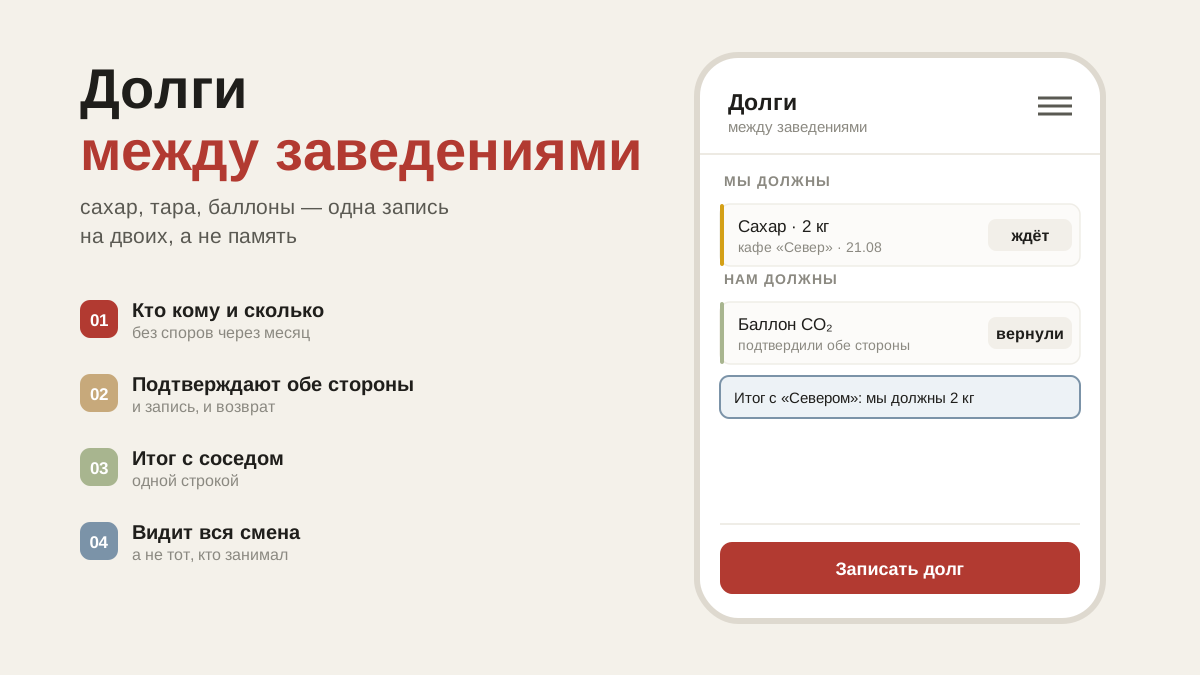
"Lend us two kilos of sugar"
If you have several venues in town, or simply a good relationship with the kitchen next door, you have done this more than once. The sugar ran out in the middle of a banquet — someone ran next door. You gave away your gas cylinder because theirs had run out. You took a case of mineral water to tide you over until the delivery.
A fortnight later nobody remembers who owes what to whom. It usually ends one of two ways: either the debt is quietly forgotten (and somebody loses money), or an awkward conversation begins with "actually, you still owe us for the sugar".
One record for two
The app has a "Debts" section. You record the direction (taken or given), what exactly, and with whom.
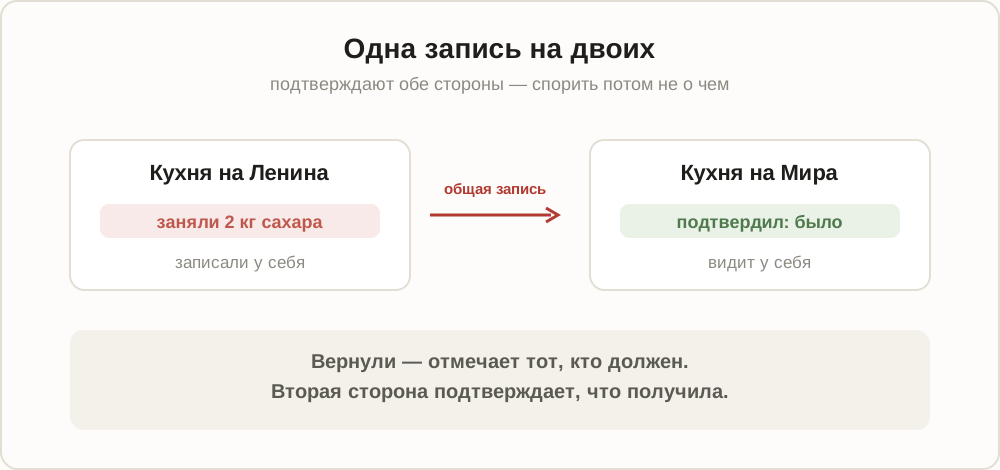
If your neighbour also uses the app, find them in the list — then the record becomes shared. They confirm the debt existed, and from then on you both see it on your own side. That is the key difference from a notebook: the record exists for two people at once, and there is no longer any arguing about whether it exists.
If the neighbour isn't in the app, the record stays a note to yourself. Still better than memory, but there will be no confirmation.
The return is confirmed by both sides
Once it's given back, the one who owed marks it. The other side confirms they received it. Until that confirmation, the debt stays open.
That is deliberate. If one person could close a debt on their own, the record would turn into an ordinary note saying "I think I gave it back". Double confirmation is what makes debts worth believing.
Why this is needed at all
Sugar and cylinders are small change. But if you have three venues, a few dozen such small things pile up over a month, and together they are no longer small. More importantly, the friction between your own people disappears: nobody feels they are being taken advantage of, because everything is written down and both sides can see it.
Common questions
The neighbour won't confirm the debt. Then it's worth talking: they may remember it differently. The point of the record isn't to force anyone, but to have the disagreement surface straight away instead of a month later.
We gave back something different. Write exactly that in the return — what matters is that both sides consider the debt closed.
A debt between our own venues. It works the same way. Venue data doesn't mix: each has its own goods, suppliers and orders, while a debt is one record shared by two cards. On having several venues, see the article about the team and several restaurants.